

There are few things in the world of coffee as iconic, as debated, and as deeply satisfying as a perfectly pulled shot of espresso. It's the foundation of countless drinks — the lattes, cappuccinos, macchiatos, and flat whites that fill café menus around the globe — yet it stands magnificently on its own: a small, concentrated, intensely flavoured liquid that packs more complexity into a single ounce than most beverages manage in an entire glass.
But what exactly is espresso? How did it come to dominate global coffee culture? And what separates a transcendent shot from a bitter, disappointing one? Let's take a deep dive.
A Brief History of Espresso
Espresso was born out of necessity — specifically, the need for speed. In the bustling industrial cities of early 20th-century Italy, workers needed their coffee fast. The traditional brewing methods of the time were slow, and café owners were looking for a solution.
In 1901, Luigi Bezzera patented the first espresso machine, which used steam pressure to force hot water through coffee grounds in a matter of seconds. The word espresso itself comes from the Italian for "pressed out" or "fast" — a nod to both the brewing method and the speed of service.
Over the following decades, the machines evolved. Achille Gaggia's 1948 invention of the spring-piston lever machine was a watershed moment — it allowed baristas to generate much higher pressures (around 8–10 bar), producing the rich, golden crema that we now consider the hallmark of a great espresso. The modern espresso era had truly begun.
The Science Behind the Shot
Making espresso is as much a science as it is an art. Every variable matters, and small changes can have dramatic effects on the final cup. Here are the key parameters that every barista — amateur or professional — needs to understand:
Grind Size
Espresso requires a very fine grind — finer than almost any other brewing method. The grind size controls how quickly water flows through the coffee puck. Too coarse, and the water rushes through too fast, producing a weak, under-extracted shot. Too fine, and the water can't push through at all, or produces an over-extracted, bitter result. The sweet spot is a grind that allows a 25–30ml shot to pull in approximately 25–30 seconds.
Dose & Tamping
A standard single espresso uses around 7–9 grams of ground coffee; a double (the most common in specialty coffee) uses 18–21 grams. Once the grounds are in the portafilter basket, they must be tamped — compressed with a flat tamper — at around 30 lbs of pressure to create an even, dense puck. Uneven tamping leads to channelling, where water finds the path of least resistance and extracts unevenly.
Water Temperature & Pressure
The ideal water temperature for espresso extraction is between 90–96°C (194–205°F). Too hot and you'll scorch the grounds; too cool and you'll under-extract. Pressure should be maintained at 9 bar throughout the extraction — this is the standard that produces the emulsified oils and the characteristic crema.
☕ Quick Reference: The Perfect Espresso
- Dose: 18–21g (double shot)
- Yield: 36–42ml (1:2 ratio)
- Extraction time: 25–30 seconds
- Water temperature: 90–96°C
- Pressure: 9 bar
- Grind: Very fine, like table salt
Understanding Crema
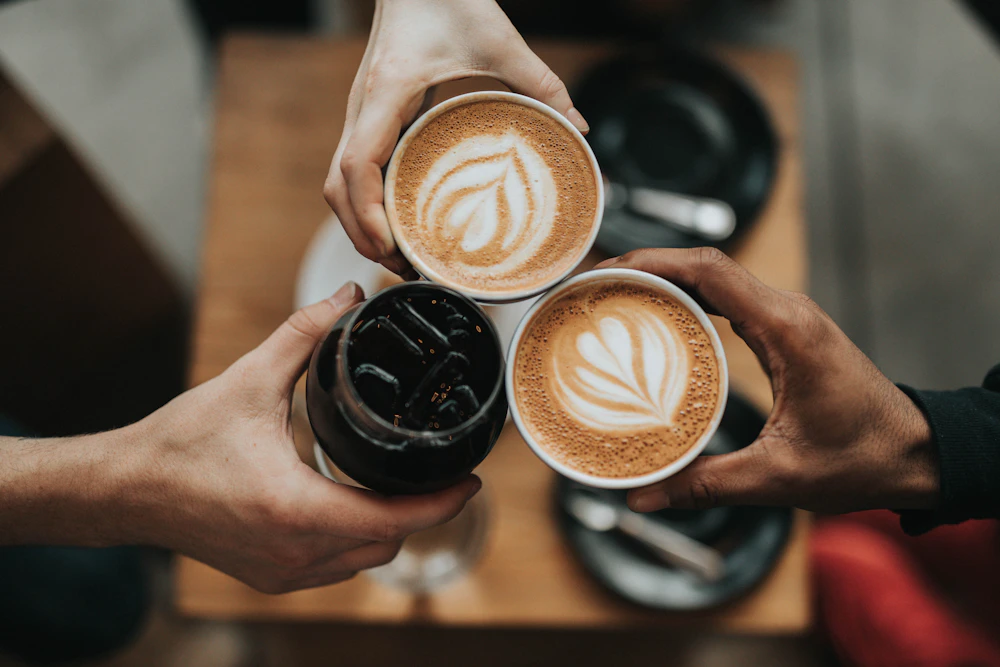
That beautiful, reddish-brown foam sitting atop a freshly pulled espresso shot is called crema, and it's one of the most talked-about aspects of espresso quality. Crema forms when carbon dioxide — released from freshly roasted coffee — emulsifies with the oils in the coffee under high pressure.
Good crema is thick, persistent, and a deep hazelnut-to-reddish-brown colour. It contributes to the aroma and mouthfeel of the espresso, and a well-made shot's crema should last for at least a minute before dissipating. However, crema alone isn't a guarantee of quality — very dark roasts can produce abundant crema while tasting flat or bitter. Use it as one indicator among many.

Espresso Drinks: A Family Tree
Espresso is the foundation of an enormous family of drinks. Understanding the base helps you appreciate every variation:
- Ristretto: A "restricted" shot — same dose, half the water. More concentrated, sweeter, less bitter.
- Lungo: A "long" shot — same dose, double the water. More bitter, higher caffeine extraction.
- Americano: Espresso diluted with hot water to approximate drip coffee strength.
- Cappuccino: Equal parts espresso, steamed milk, and milk foam.
- Latte: Espresso with a larger proportion of steamed milk and a thin layer of foam.
- Flat White: Similar to a latte but smaller, with a higher coffee-to-milk ratio and microfoam.
- Macchiato: Espresso "stained" with a small amount of milk or foam.
- Cortado: Equal parts espresso and warm milk, cutting the acidity.
Choosing Your Beans
Not all coffee beans are created equal when it comes to espresso. While you can technically pull a shot from any roast level, certain characteristics lend themselves particularly well to the espresso method.
Roast level: Medium to medium-dark roasts are the traditional choice for espresso. They offer a balance of sweetness, body, and acidity. Very light roasts can produce bright, complex espresso but require precise technique; very dark roasts can taste flat and ashy.
Blend vs. single origin: Traditional espresso blends are designed for consistency and balance — often combining Arabica for sweetness and complexity with a small percentage of Robusta for body and crema. Single-origin espresso has become popular in specialty coffee, offering unique, terroir-driven flavours, though they can be more challenging to dial in.
Freshness: Coffee for espresso should ideally be used between 7 and 21 days after roasting. Too fresh and excess CO₂ causes uneven extraction; too old and the flavours become stale and flat.
Home Espresso: Is It Worth It?
The rise of home espresso machines has made it possible for enthusiasts to pull café-quality shots in their own kitchens. But it requires investment — both financial and in terms of time and learning.
A quality entry-level espresso setup (machine + grinder) will set you back at least £400–600, and the learning curve is real. Dialling in your grind, dose, and technique takes patience. But for those who love espresso deeply, there's nothing quite like the satisfaction of pulling a perfect shot at home.
Whether you're a seasoned home barista or just beginning your espresso journey, the most important thing is curiosity. Taste widely, adjust methodically, and never stop learning. The world of espresso is vast, and every shot is a new opportunity to get it right.


